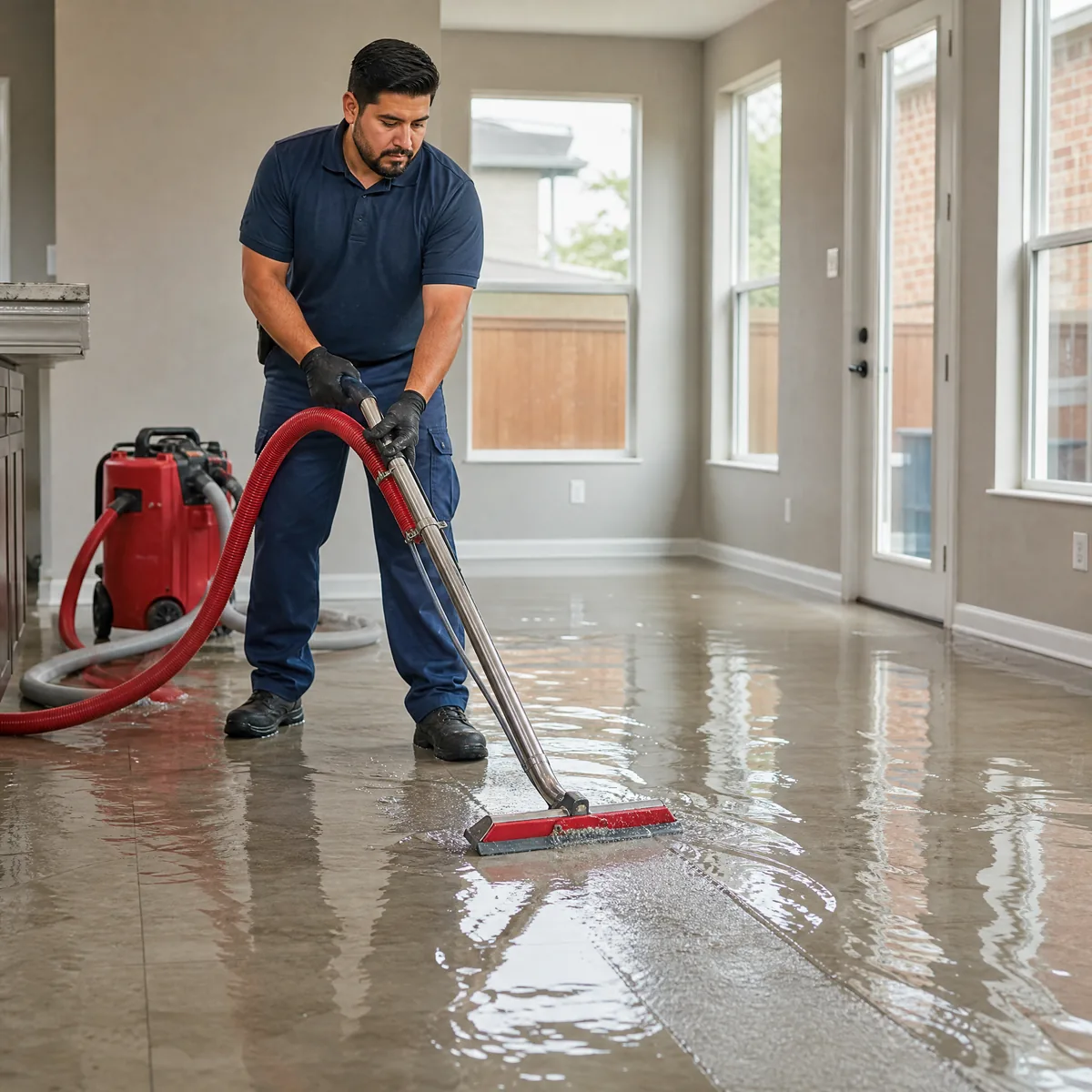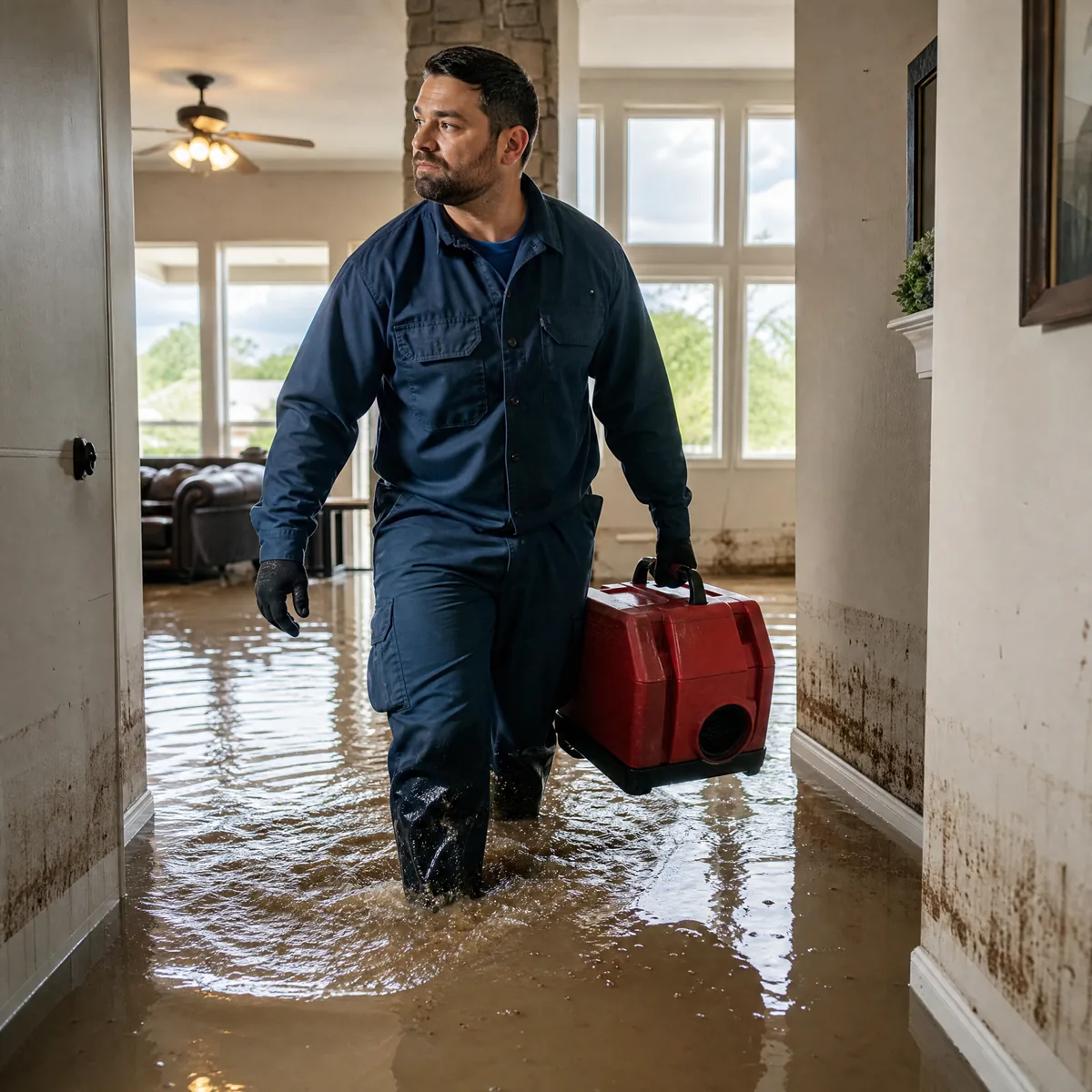
A dry surface does not tell the whole story
A room can look usable while moisture remains beneath a floor, inside a cabinet base, or between levels. Drying should account for the affected materials and the water path. The completion decision needs more than a visual check or the disappearance of the original puddle.
Call (866) 552-5141 with your Palmdale address, what happened, and whether the source has stopped. Discuss independent provider availability, the initial assessment, and any source repair already arranged. The responding business confirms the work it can handle and its charges.
Moisture measurements need a clear purpose
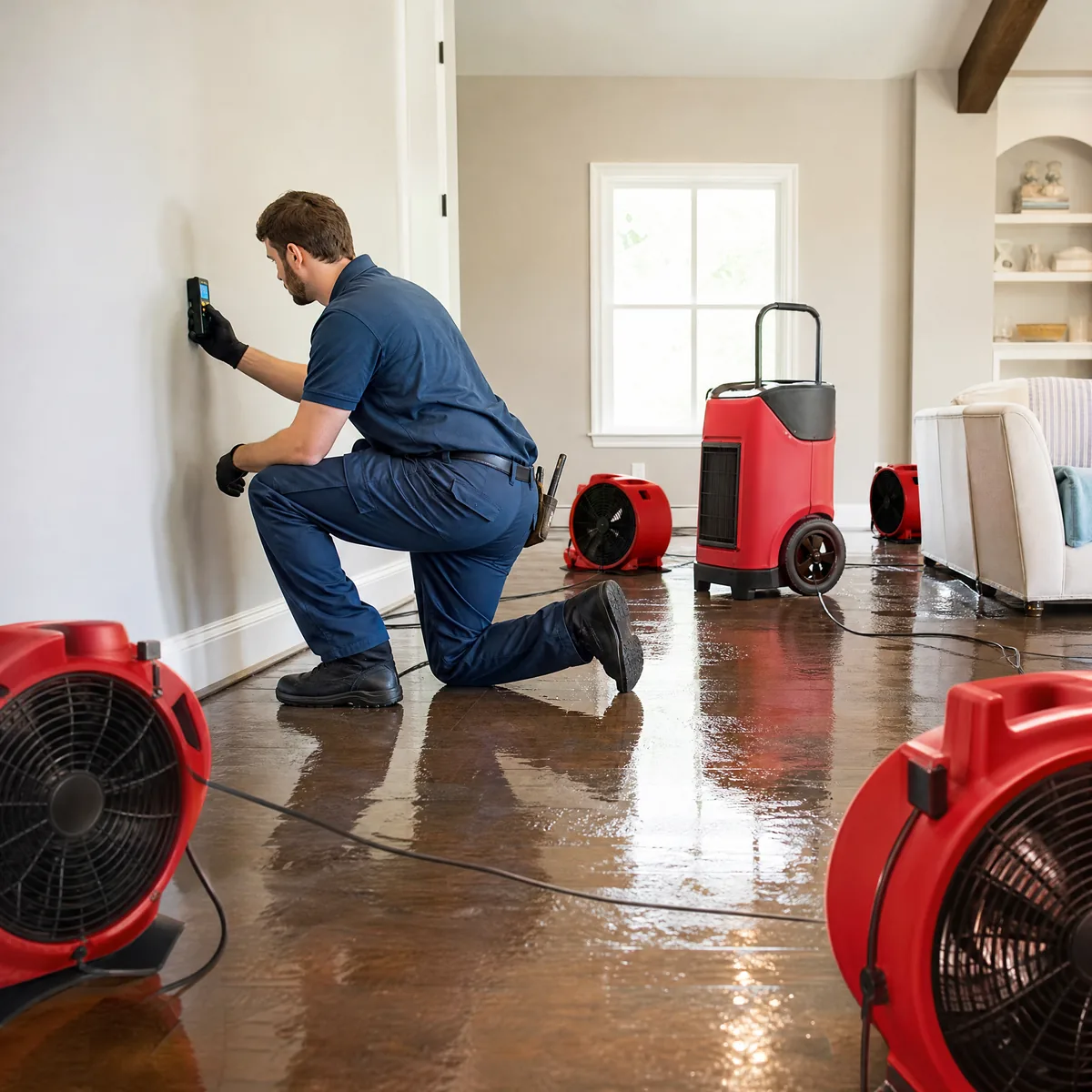
A contractor may use different inspection tools to identify affected surfaces and compare conditions at repeat locations. The readings are most useful when they are tied to the material being assessed, the room involved, and a reasonable target for that assembly. A number without context does not explain whether a floor or wall is ready.
Ask how the initial conditions will be recorded and how progress will be reviewed. An inspection may need to extend beyond the original puddle to adjoining rooms or the level below. This matters when water has traveled beneath continuous flooring or along a cavity before becoming visible somewhere else.
Do not use a warm Palmdale afternoon as a moisture test
Outdoor warmth does not establish the condition inside a wet wall or beneath flooring. Ask which assemblies will be monitored and what the readings show. The provider should select drying methods around the materials and actual conditions, with appropriate access to concealed areas.
If the building stays occupied, discuss electrical supply, equipment placement, secure doors, and return visits. Ask what the drying agreement includes and which repairs remain after the materials have been evaluated for the next stage.
Air movement and dehumidification work together
Air movers help suitable wet surfaces release moisture. Dehumidifiers remove water vapor from the air so the surrounding conditions can support continued drying. Placement, room boundaries, temperature, and air exchange influence the result. Equipment selection should follow the loss instead of relying on an arbitrary machine count.
Discuss which doors or windows should remain closed and whether the equipment is intended to run continuously. Moving a fan or switching off a dehumidifier can alter the conditions the contractor is measuring. If the setup creates a practical problem, such as noise near a bedroom, ask about an adjustment rather than changing it without coordination.
Floor assemblies need material-specific decisions
Hardwood, laminate, carpet systems, and resilient flooring have different limitations after wetting. Moisture below a finish may be difficult to reach even when the surface is exposed to moving air. The condition of adhesives, padding, backing, and the subfloor can affect whether retention is reasonable.
Where a concrete slab is involved, the contractor needs to distinguish a recent water loss from another moisture condition. A floor problem alone does not prove there is a broken pipe below the slab. Slab-leak water-damage cleanup explains how leak diagnosis and restoration fit together when a concealed line is suspected.
Removal can be part of the right drying plan
Some materials are too damaged, contaminated, or inaccessible to keep. Opening a wall or taking out an unsuitable floor layer may provide necessary access rather than represent a failure of the drying equipment. The contractor should explain why removal is recommended and what will be left for the repair stage.
Older finishes or insulation may require additional evaluation before disturbance. Keep specialized testing or removal within the appropriate professional scope. Do not assume that an emergency water loss makes every concealed material safe to cut, sand, or dispose of without considering what the assembly contains.
Drying beneath the home is a separate access challenge
A crawl space may contain wet soil, insulation, framing, utilities, and remnants of an earlier moisture problem. Work below the home needs safe access and a plan for the actual source. Drying the occupied room above does not establish that the lower assembly has been assessed.
Tell the provider if water is visible beneath the house or if a plumbing contractor has reported a leak there. The crawl-space page covers the additional coordination. Encapsulation, drainage improvement, and source repair should be identified separately from the current cleanup instead of being assumed to be part of every drying job.
Progress should guide equipment removal
An initial estimate can help you plan around the disruption, but the actual drying duration depends on the materials, depth of wetting, access, and conditions. Monitoring should show what is improving and what remains unresolved. When progress stalls, the provider should explain the next decision rather than simply extend the rental period without context.
Ask what completion documentation will be available. A flooring installer or repair contractor may have additional requirements for the materials they intend to install. Sharing the drying records allows that decision to be made with better information than the surface appearance of the room.
Plan for daily life during the work
Equipment can affect noise, temperature, access, and the use of electrical circuits. Cables, hoses, containment, or exposed finishes may create areas that should remain restricted. Discuss bedrooms, pets, work-from-home needs, and access for monitoring before the setup is finalized.
For a Palmdale apartment or townhouse, arrange access through the appropriate manager or association contact when shared areas are involved. Call (866) 552-5141 for drying help and describe the current stage of the loss. If water is still standing, water extraction may need to precede the longer drying work.
Structural drying: common questions
How many days should the drying machines run?
Can the room stay occupied during drying?
Does an infrared image prove a material is wet?
Does drying include new drywall or flooring?
Help for your Palmdale address
See the Palmdale and nearby area guides for access details. Call with the full address to confirm provider coverage and current availability.