Find what is above the stain before closing it up
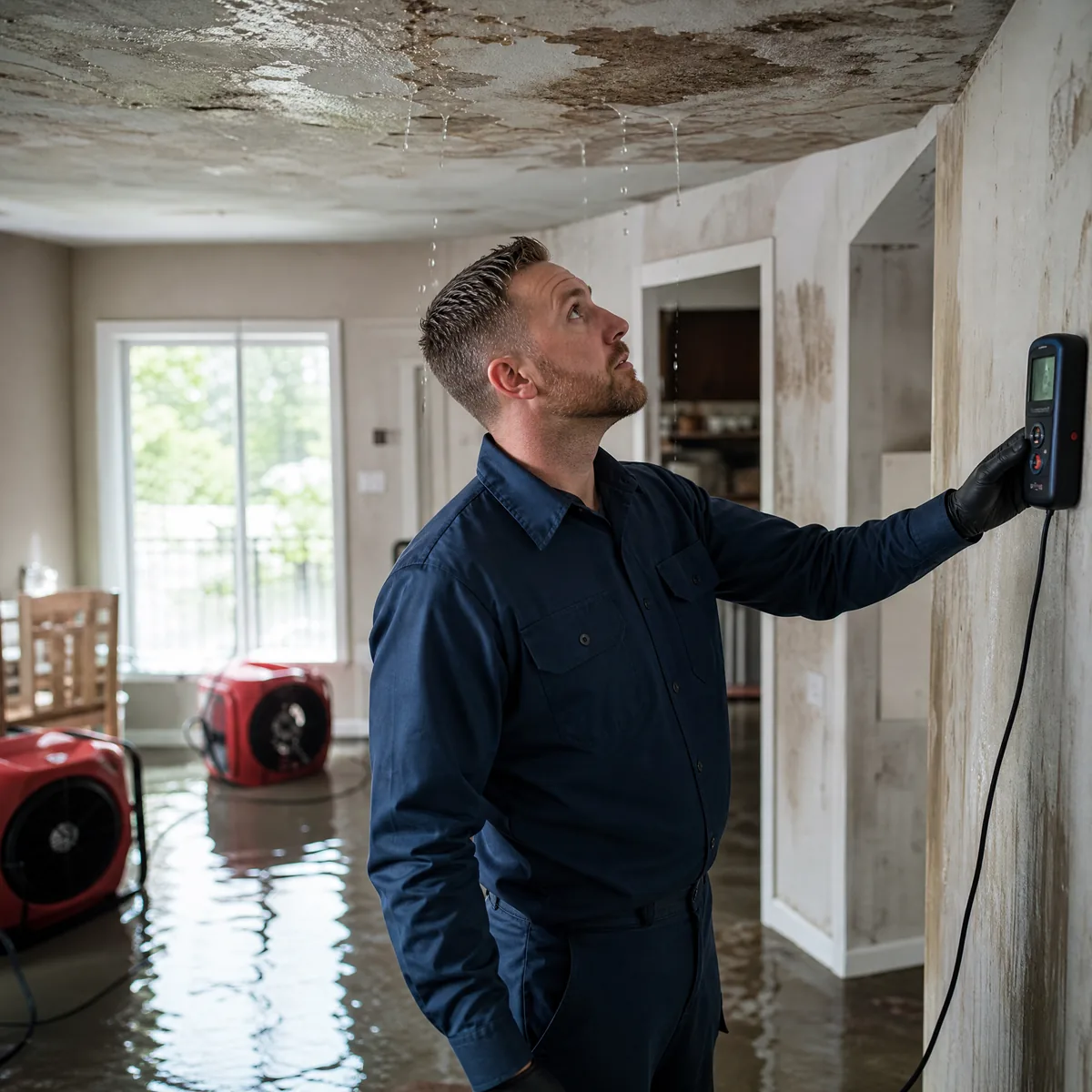
Ceiling water can come from roofing, plumbing, an upstairs fixture, or equipment above the room. The stain may be some distance from the source because water travels along building components. Do not puncture a bulge or stand under an unstable ceiling to investigate.
Call (866) 552-5141 with your Palmdale address, what happened, and whether the source has stopped. Discuss independent provider availability, the initial assessment, and any source repair already arranged. The responding business confirms the work it can handle and its charges.
Bulging or sagging changes the urgency
Do not stand beneath a swollen ceiling to press on it, puncture it, or take a close photograph. Wet material may be unstable. Keep occupants away from the area below and treat water near lights, fans, smoke alarms, or electrical equipment as a concern for the appropriate qualified professional.
If collapse or an immediate electrical danger is suspected, leave the affected space and contact emergency services or the relevant utility. A restoration call is for cleanup coordination. It should never require you to investigate an unstable ceiling before a provider is willing to discuss the situation.
Roofing, plumbing, or equipment above the room?
At your Palmdale property, explain whether the drip appeared during rain, when plumbing was used, or while cooling equipment was running. Timing is useful evidence, but it does not establish the cause without inspection. A roofer, plumber, or HVAC technician may need to coordinate with the restoration provider.
For a multi-unit building, notify management if access to an upstairs space is needed. Confirm responsibility for the source, wet insulation or drywall, monitored drying, and the ceiling repair that follows.
Connect the timing to the source investigation
A leak that appears during rainfall may require roof or exterior-envelope investigation. Water associated with use of an upstairs bathroom may require plumbing assessment. Those patterns are useful observations, but they are not proof of the cause. Share them with the professional investigating the source.
If access to another unit is needed, contact the building manager or owner early. In a Palmdale apartment or condo, the room above may appear normal from its own floor surface. Coordinating both sides of the assembly can be more useful than repairing the lower stain without understanding how it became wet.
Consider the ceiling cavity and the finishes below
The assembly can contain insulation, framing, plumbing, wiring, and different ceiling materials. Moisture may remain in concealed components after the drip stops. An inspection may require measurements or controlled access before the contractor can explain what can be retained.
The room below also deserves attention. Flooring, furniture, walls, or built-in cabinets may have received the water emerging from above. Tell the provider about these areas during the walkthrough. Treating only the stained ceiling could leave the resulting damage beneath it outside the agreed scope.
Removal should have an explained purpose
An unstable finish, inaccessible wet insulation, or damaged component may need removal. The contractor should identify why the opening is needed and what condition they expect to investigate or address. The size of a surface stain alone should not be used to guarantee either minimal patching or a complete ceiling replacement.
Older finishes can introduce additional considerations before disturbance. Ask who handles any needed evaluation and specialist work. When more than one trade is involved, clarify which provider makes the opening, which assesses the concealed source, and which eventually restores the finished surface.
Drying belongs before the final patch and paint
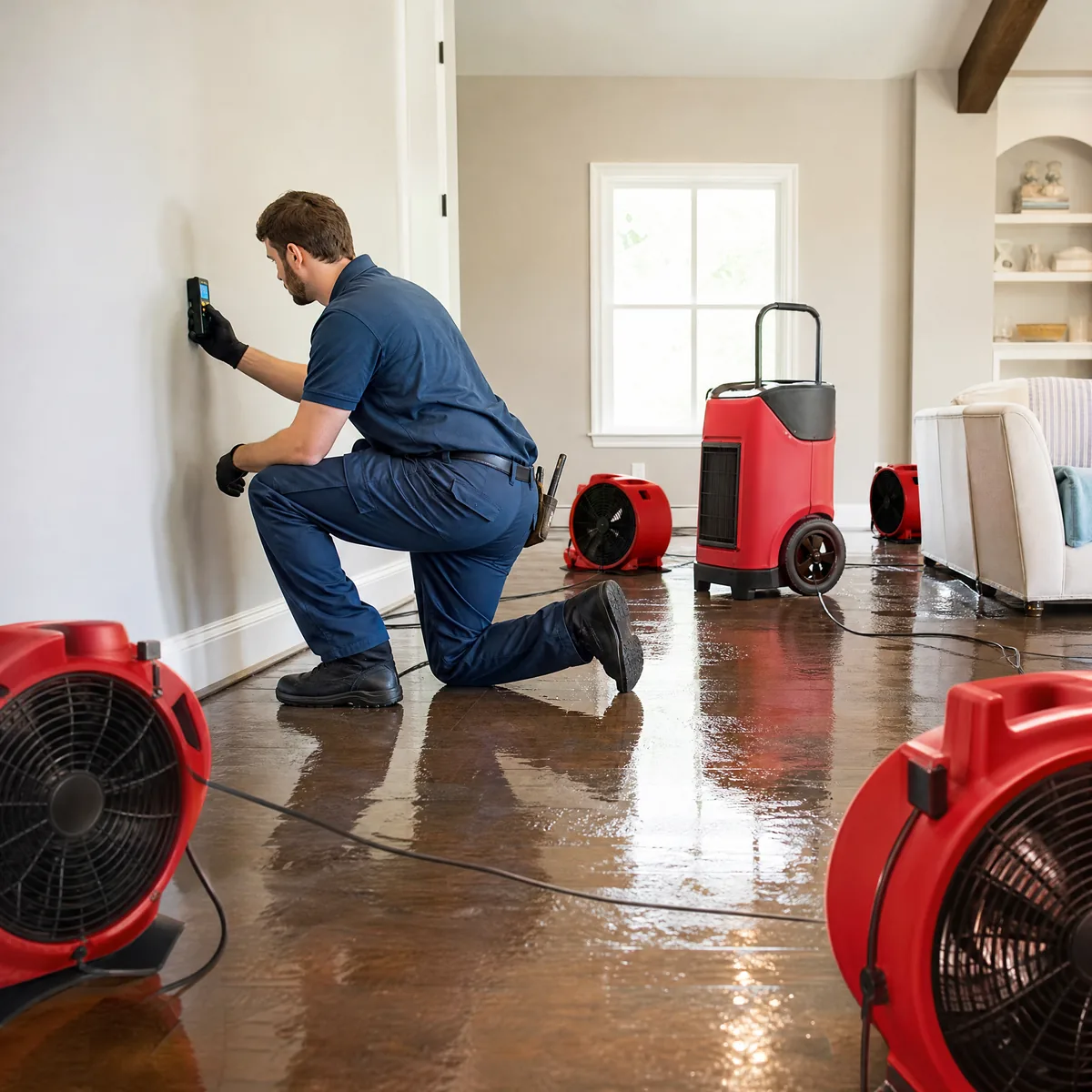
Once further water entry is addressed, the remaining affected materials can be evaluated for drying. The approach needs to reflect the cavity and the materials, rather than simply pointing household fans at the ceiling from the room below. Ask how the contractor will check the areas that cannot be judged by sight.
Structural drying may continue after the initial visit. Keep the completion information for the repair contractor. Replacing a ceiling tile or applying stain-blocking paint is a finish decision; it does not establish that the source is fixed or the surrounding assembly has been appropriately addressed.
Keep unit access and repair responsibilities clear
For a shared building, the source, structure, private finishes, and personal belongings may involve different responsible parties. Notify the appropriate contacts without assuming liability from where the stain appeared. Give the contractor an authorized person who can arrange access and approve the proposed work.
Record affected rooms and the date changes were observed. Save source findings, scope changes, photographs taken safely, and drying records. A clear handoff helps the owner, managing agent, and repair trades understand the actual work instead of reconstructing the incident after the ceiling has been closed.
Arrange an assessment for a wet ceiling in Palmdale
Call (866) 552-5141 with the address, affected floor, and whether the ceiling is dripping or sagging. Explain whether a roofer or plumber has already looked at the source. The provider can confirm current service availability and what access is needed next.
For rain entry, see roof-leak water damage. For a known plumbing failure, review burst-pipe cleanup. If water involves several units, use the apartment and condo page to organize the building contacts and affected spaces.
Ceiling water damage: common questions
Can I wait until the stain gets bigger?
Does a stopped drip mean the leak is fixed?
Will the entire ceiling need removal?
Can I repair my unit without involving the one above?
Help for your Palmdale address
See the Palmdale and nearby area guides for access details. Call with the full address to confirm provider coverage and current availability.